Cartoon Illustrated by Matt Pritchett - Telegraph Cartoonist

Cartoon Illustrated by Matt Pritchett - Telegraph Cartoonist 2

Matt Pritchett’s cartoons delight readers each day.

Matt is a Telegraph institution, and his witty sketches are a vital part of the newspaper. In his newsletter, the enormously popular cartoonist explains just what inspires him each day, and shares an extra, unseen cartoon, which will not have been published anywhere else.

For more cartoons from Mat you can subscribe to The Telegraph

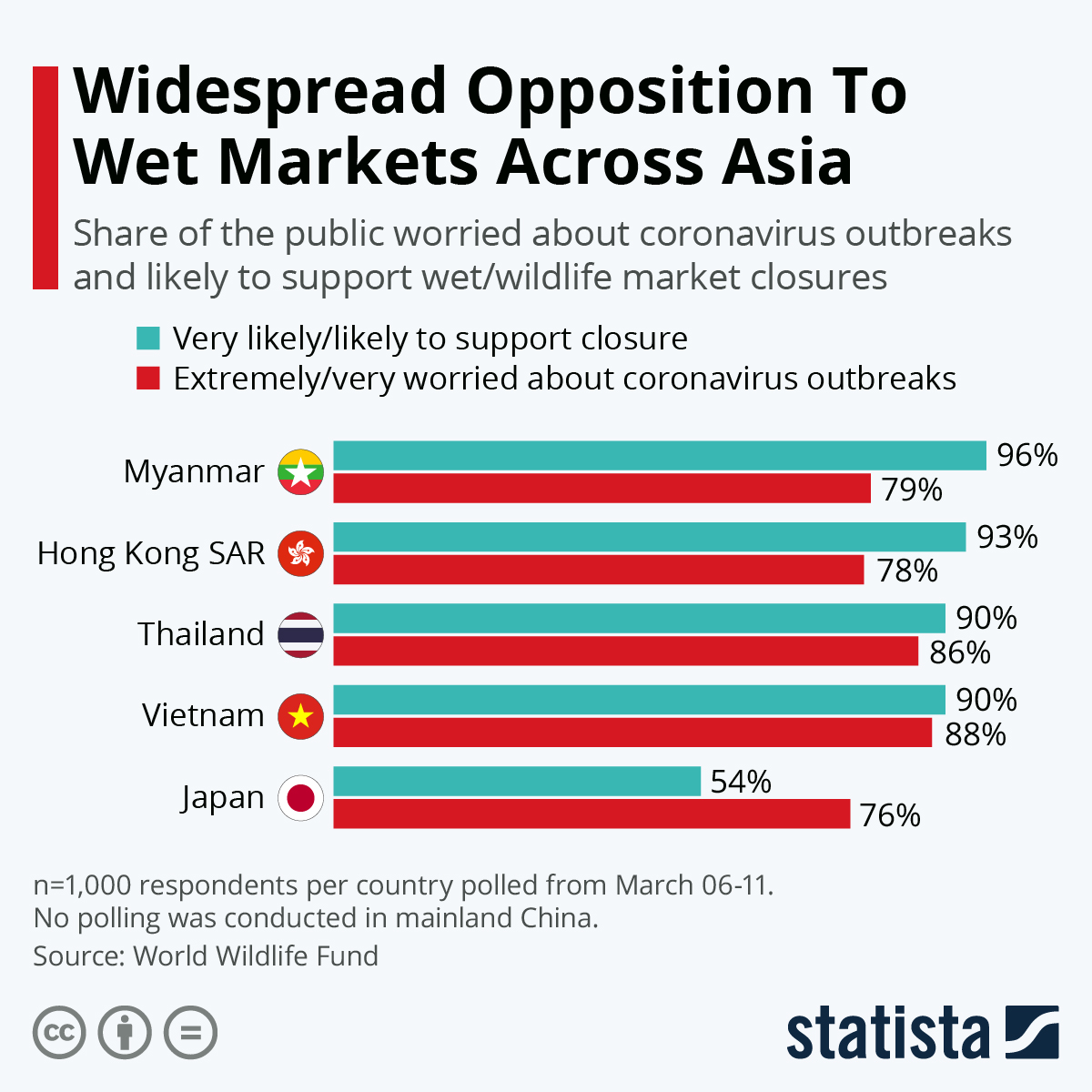
Widespread Opposition To Wet Markets Across Asia

Last week, the Australian government described wildlife wet markets as a “biosecurity and human health risk” and urged G20 countries to take action against them. Even though nobody knows exactly how COVID-19 originated, it is thought that the coronavirus was spread through exotic animals at the Huanan wet market in Wuhan in China. Last week, the World Health Organization also called for stricter safety and hygiene standards in wet markets, particularly those selling exotic wildlife.

Generally, wet markets are common across the Middle East and Africa where people depend on them as an important food source. However, in the wake of the COVID-19 outbreak, opinions regarding wildlife wet markets across Asia in particular have turned negative. The World Wildlife Fund published polling earlier this month showing opinions about the markets in Hong Kong, Vietnam, Thailand, Myanmar and Japan.

It found that worries are high regarding the possibility of another coronavirus outbreak. 88 percent of those polled in Vietnam were either extremely or very worried about that occurring, along with 86 percent in Thailand, 79 percent in Myanmar, 78 percent in Hong Kong and 76 percent in Japan. In all countries except Japan, 90 percent or more of respondents would support government efforts to close wildlife wet markets. The report states that Japan’s low figure of 54 percent is due to a large share of those polled saying that there are no wildlife wet markets in the country. Indeed, open wildlife markets are not thought to be particularly prevalent in Japan.

Originally posted my statista.com - the original post can be found here

Widespread Opposition To Wet Markets Across Asia 3

Humans are to blame for the COVID epidemic, say scientists

Humanity will face waves of epidemics if we continue to disrupt natural ecosystems, warned scientists from the Intergovernmental Science-Policy Platform on Biodiversity and Ecosystem Services (EPBES) in 2019. Their predictions proved correct: In 2020, the global economy has been just about shut down to reduce the impacts of the coronavirus.

Many scientists and the media have been quick to seek out a scapegoat in the animal kingdom to blame for the spread of COVID-19 to humans. Snakes, pangolins and bats have all been accused of being the vectors for the epidemic. But other experts look to the global economy that favors growth at any cost, and the massive unfair accumulation of wealth from exploiting raw natural resources, for answers.

Instead of blaming animals for the epidemic, it is the expansion of mining, roads, cities and agriculture that bring humans into contact with organisms and pathogens we are not familiar with that these scientists hold responsible. And, existing extensive trade in wild animals and their parts for human consumption as food or medicines exposes humanity to new infectious diseases. The intensive nature of global travel and economics makes the transmission of new diseases so much easier.

Humanity’s rapacious appetite for minerals, wood, food and sex mean that we are consuming natural resources as never before. Our growing populations demand more and more from the earth. Forests of central Africa and the Amazon are being decimated to supply world markets with wood, and to make space for cattle and palm oil farming. Mines scour the earth and spew toxic poisons into rivers. And in the process, many wild animals are captured in newly exposed ecosystems to be eaten as bushmeat, exported for pets, jewelry, medicines and fetish food items.

Nicolette Peters, a researcher for Political Animal Lobby (PAL) states, “We blame animals for the conditions on earth that humans have created, for the coronavirus. But our destructive behaviors and endless appetite for natural resources drive these epidemics. It is high time for us to rethink the way that we do business, and to stop exploiting earth simply to sponsor our luxuries and fetishes.”

Largest Ever Pangolin Scale Shipment Discovered in Midst of Global COVID Panic

While China has just outlawed the trade in wild animals for human consumption following the global outbreak of the COVID-19 epidemic, the largest ever hauls of pangolin scales have been seized in Singapore. In the first few weeks of April, 25 tonnes of pangolin scales have been seized from boats bound from Nigeria for Vietnam.

Pangolin scales are widely used in Asian medicine although they have no proven medical benefits. The majority of these shy and gentle animals are poached in Africa, with Asian populations already depleted to the verge of extinction.

The pangolin has been fingered by scientists as one possible source of the COVID-19 outbreak, which is believed to have emerged at a live animal market in Wuhan, China. Yet, in the midst of worldwide lockdowns, the pangolin trade flourishes as never before.

PAL spokesperson, Elizabeth Kruger, asserts: “If there were ever a time to quit hunting down wild animals for human pleasure and satisfaction, it would be now. The global outbreak of the COVID virus proves yet again that humans need to respect nature. African governments need to clamp down on the illegal wildlife trade to Asia and elsewhere if we are to stem the tide of animal-borne diseases to humans, and at the same time conserve our rapidly dwindling populations of precious wild animals and ecosystems.”

Chimpanzees, Orangutans and Gorillas in Great Danger of COVID-19

Coronavirus could be deadly to the great apes of the world. If the virus reaches the few remaining gorillas, orangutans and chimpanzees, they might be doomed.

Critically endangered gorillas and chimpanzees in Central Africa are being isolated from humans in a bid to protect them from the current coronavirus outbreak. But their future is uncertain: national parks there are closing their doors until the threat has passed.

Andrea Matthee, from the Political Animal Lobby (PAL), said that this threat adds to concerns about the great apes: “Sensible steps have been taken to isolate the animals, but the coronavirus could be devastating to them.”

To make matters worse she said that anti-poaching activities could be at risk because revenues from gorilla tracking permits fund their conservation, and there will be none coming into the African reserves which safeguard them.

Primates like orangutans, chimpanzees and gorillas easily pick up respiratory disease from humans, although it is still unknown whether COVID-19 will affect them. Outbreaks of the common cold and pneumonia have been lethal for chimpanzees in Africa. People can also transmit measles, polio and tuberculosis to these vulnerable creatures. Scientists such Fabian Leendertz, a wildlife epidemiologist at the Robert Koch-Institute and Max Planck Institute for Evolutionary Anthropology in Germany told LiveScience in 2008 that, “Virtually all diseases that can harm us can harm the great apes since we share so many genetic and physiologic properties”.

As a precaution to protect these endangered animals, nature reserves such as Virunga in the Democratic Republic of Congo, Nyingwe, Volcano and Mukure Parks in Rwanda, have all shut. Tourism has come to a standstill.

Forest animals are already under enormous threat from humans. African Wildlife Foundation explains the pressures gorillas in the Democratic Republic of Congo: “The political instability and pressure from rebel groups throughout the area put pressure on Virunga National Park, placing this great ape in the middle of this social and economic crisis”.

All of these great apes’ habitat is being destroyed in the face of mining and deforestation. They are hunted for their body parts which are used for medicine or souvenirs, and their infants are sold as pets, according to Endangered Species International. In some places, people eat these large primates as bushmeat. In Central Africa, conservation fees from tourism help to pay patrols to prevent illegal hunting, maintaining protected areas, and conducting research.

Humans carrying the coronavirus pose one more threat to the great apes already on the verge of extinction.

The billion dollar international trade in reptiles ignored health and helped the coronavirus.

Millions of reptiles are caught and traded globally every year. These animals are transported and kept captive in the most inhumane conditions for people to use as pets, medicines and fashion accessories.

Reptiles constitute 20% of the global trade in wild animals, and in the USA alone the trade is valued at $2-billion annually.

The trade is inherently cruel and frequently illegal, but it is growing, not shrinking and this is because, collectively, governments lack the will to properly enforce international laws, according to Andrea Matthee, of international animal organization, the Political Animal Lobby (PAL). “We have been warning for years that the trade in reptiles and other wild animals is endangering world health. The coronavirus is proof of this, and it is time that we held our politicians to account and demanded they work together to end then trade,” she said.

In the UK, it is estimated that nearly one million reptiles are kept as pets, from tortoises, to iguanas and pythons. The United States, meanwhile, provides the biggest market in the world for live African Ball Pythons, which can only be found in the wild in Togo, Benin and Ghana. In South-East Asia, almost half a million python skins are exported every year. Turtles are also extremely popular. They are hunted for their shells and for live use as pets. In ten years, between 1999 and 2008, nearly 2 000 tons of turtle shells were imported to Taiwan alone.

When reptiles are kept as pets in most cases, they are kept in cramped conditions, and forced to live in small glass or plastic boxes. They have to live in climates completely different to their native territories. Reptiles are simply not meant to be kept as pets. When the reptiles are in transit, they face the most gruelling conditions where they are more likely to get sick and spread diseases. 75% of new infectious diseases – like the current coronavirus epidemic - in human populations come from animals. Reptiles are no different.

Much of the reptile trade takes place online and through social media platforms like Facebook, Instagram and YouTube.

Co-ordination between inter-governmental organizations such as Interpol, Europol and the New Zealand Department of Conservation has led to crack-downs on the international reptile trade which is decimating wild populations. Operation Blizzard is one such undertaking, which led to 4 400 seizures of live reptiles and the identification of 200 suspects in the trade in 2019. Clearly, governments can regulate international trade in wild animals.

Snakes, turtles and lizards all deserve to live, and to be treated humanely. PAL calls on governments to clamp down on trade in reptiles and all wild animals.

Pangolin trade now batters Africa’s population

Last year, PAL brought to your attention the plight of the most trafficked animal in the world: the meek pangolin. These shy creatures are on the verge of extinction: more than a million have been killed in the last decade. Their scales and meat sell for high prices in Asia.

The situation is so bad that pangolins are now a rarity in Asia. The trade has now shifted to Africa, where the largest shipments of pangolin bodies and scales come from Uganda, Nigeria, Cameroon and Sierra Leone. Kenya, Tanzania, Congo and South Africa have all been implicated in the trade.

The majority of pangolins are exported from Nigeria and Cameroon, and end up in China. Vietnam, Laos and Myanmar are also consumers of these endangered creatures.

Andrea Matthee, from the Political Animal Lobby (PAL), said that her organization is deeply concerned that - unless the world takes urgent action - pangolins will be no more. “The opening up of an African trade in pangolins could tip the balance because law enforcement in many of the countries where they are traded is poor and there seems to be an almost complete lack of concern by the governments,” she said. “Pangolins are likely to be extinct in the next twenty years at current poaching and trading rates,” she added.

The consumption of pangolin meat has been linked to the current worldwide outbreak of the Coronavirus. In response, the Chinese government has temporarily closed ‘wet’ markets where living and dead pangolins are sold.

But it is not the meat trade alone that is making them disappear: their scales are traded by the ton for use in traditional medicine.

Pangolin scales are seized by the ton in Asian ports, with up to 27 tons amongst the largest hauls. Each ton requires from 300 to almost 1600 pangolins: 27 tons would require anything from 7500 to 43 000 of these shy, affectionate animals. Sanctioned by the Chinese government, 200 different pharmaceutical companies there use the powdered scales in 60 different types of medicine for treating anything from arthritis to rheumatism.

Outrage as animal welfare groups listed on terror chart

Environmental and animal welfare groups in Britain are listed on a counter-terrorism document, distributed by the police, that appears to link them to far-right extremists and jihadists.

Greenpeace, Sea Shepherd, and Extinction Rebellion (XR) are all listed among neo-Nazi and banned terror organisations.

Also included is Stop the Badger Cull, which is headed by Queen guitarist, Sir Brian May and which PAL is a member.

The document was uncovered in January by the Guardian newspaper.

“We support Stop the Badger Cull because badger culling is cruel and pointless, to include the organisation on a terror list is ridiculous and has implications for free speech by those who care for animals,” said Andrea Matthee, lead campaigner for the Political Animal Lobby (PAL), a London-based animal welfare organisation.

“To list those of us who care about animals, alongside neo-Nazis and religious extremists is an outrage.”

Some of the UK’s most prominent people support environment and animal movements.

Greenpeace supporters include Dame Judi Dench, Stephen Fry, Gillian Anderson and Joanna Lumley. Sea Shepherd supporters include Sean Connery and Pierce Brosnan.

They appear alongside a number of extremist right-wing groups including Combat 18 and the National Front, as well as National Action, which has been banned for terrorist violence.

The document, produced by Counter Terrorism Policing and distributed to medical staff and teachers as part of anti-extremism briefings, has been used across England as part of training for Prevent, the anti-radicalisation scheme designed to catch those at risk of committing terrorist violence.