Pangolin trade now batters Africa’s population

Last year, PAL brought to your attention the plight of the most trafficked animal in the world: the meek pangolin. These shy creatures are on the verge of extinction: more than a million have been killed in the last decade. Their scales and meat sell for high prices in Asia.

The situation is so bad that pangolins are now a rarity in Asia. The trade has now shifted to Africa, where the largest shipments of pangolin bodies and scales come from Uganda, Nigeria, Cameroon and Sierra Leone. Kenya, Tanzania, Congo and South Africa have all been implicated in the trade.

The majority of pangolins are exported from Nigeria and Cameroon, and end up in China. Vietnam, Laos and Myanmar are also consumers of these endangered creatures.

Andrea Matthee, from the Political Animal Lobby (PAL), said that her organization is deeply concerned that - unless the world takes urgent action - pangolins will be no more. “The opening up of an African trade in pangolins could tip the balance because law enforcement in many of the countries where they are traded is poor and there seems to be an almost complete lack of concern by the governments,” she said. “Pangolins are likely to be extinct in the next twenty years at current poaching and trading rates,” she added.

The consumption of pangolin meat has been linked to the current worldwide outbreak of the Coronavirus. In response, the Chinese government has temporarily closed ‘wet’ markets where living and dead pangolins are sold.

But it is not the meat trade alone that is making them disappear: their scales are traded by the ton for use in traditional medicine.

Pangolin scales are seized by the ton in Asian ports, with up to 27 tons amongst the largest hauls. Each ton requires from 300 to almost 1600 pangolins: 27 tons would require anything from 7500 to 43 000 of these shy, affectionate animals. Sanctioned by the Chinese government, 200 different pharmaceutical companies there use the powdered scales in 60 different types of medicine for treating anything from arthritis to rheumatism.

Outrage as animal welfare groups listed on terror chart

Environmental and animal welfare groups in Britain are listed on a counter-terrorism document, distributed by the police, that appears to link them to far-right extremists and jihadists.

Greenpeace, Sea Shepherd, and Extinction Rebellion (XR) are all listed among neo-Nazi and banned terror organisations.

Also included is Stop the Badger Cull, which is headed by Queen guitarist, Sir Brian May and which PAL is a member.

The document was uncovered in January by the Guardian newspaper.

“We support Stop the Badger Cull because badger culling is cruel and pointless, to include the organisation on a terror list is ridiculous and has implications for free speech by those who care for animals,” said Andrea Matthee, lead campaigner for the Political Animal Lobby (PAL), a London-based animal welfare organisation.

“To list those of us who care about animals, alongside neo-Nazis and religious extremists is an outrage.”

Some of the UK’s most prominent people support environment and animal movements.

Greenpeace supporters include Dame Judi Dench, Stephen Fry, Gillian Anderson and Joanna Lumley. Sea Shepherd supporters include Sean Connery and Pierce Brosnan.

They appear alongside a number of extremist right-wing groups including Combat 18 and the National Front, as well as National Action, which has been banned for terrorist violence.

The document, produced by Counter Terrorism Policing and distributed to medical staff and teachers as part of anti-extremism briefings, has been used across England as part of training for Prevent, the anti-radicalisation scheme designed to catch those at risk of committing terrorist violence.

The world’s most trafficked animal is on the verge of extinction

Pangolins are under threat. Their extinction is imminent and once again it’s all thanks to mankind. More than one million pangolins have been poached or trafficked in the last decade alone and this lucrative business is thriving.

In some parts of the world pangolins are beaten and suffocated with smoke, then boiled alive. Some restaurants in Vietnam even go a step further and slaughter live pangolins at the dinner table.

The Political Animal Lobby’s (PAL) is actively involved in global campaigns to get governments to pass stricter laws and mitigate this catastrophe.

“We cannot allow this horrendous slaughter to continue, something has to be done. These solitary and peaceful creatures are one of the most trafficked mammals in the world, accounting for as much as 20% of all illegal wildlife trade,” said PAL’s Andrea Matthee.

Pangolins are mainly traded for their scales, which Chinese medicine incorrectly states can be used to treat several illnesses. The plight of the poor pangolin dates as far back as 1820, where King George III was presented with a coat and helmet made with their scales.

“This trade is still thriving today, 200 years down the line and it has always been driven by money. The scales from a single pangolin can fetch up to $100,000 (£81,000) on the black market,” explained Matthee.

All eight pangolin species are classified by the International Union for Conservation of Nature (IUCN) as being threatened or vulnerable. Two of these species are critically endangered.

International trade in pangolins is prohibited in terms of the global Convention on International Trade in Endangered Species (CITES) agreement and yet the trafficking continues unabated.

In April, 2019, Malaysian authorities uncovered 27 tonnes of animals and scales – a record breaking bust to the value of over $2 million (£1.6 million). Moreover, in Singapore 26 tonnes were intercepted and in Vietnam five tonnes were confiscated after being found hidden under a container of cashew nuts.

Beyond unfounded medicinal ignorance, pangolin meat is also treated as a delicacy and forms a big part of the multibillion-dollar bush meat trade.

“It’s time for us to rise up and fight for these voiceless creatures. Authorities around the world continue to turn a blind eye to this scourge but we will continue to fight for the survival of these creatures because if we don’t do it, who will?” said Matthee.

Pangolins, or scaly anteaters as they are otherwise known, are solitary and secretive mammals that live in underground burrows or tree hollows. They are found in parts of Asia and across the African continent and are the only mammals in the world to be covered in scales. They’ve got small heads, long snouts and even longer tongues for slurping up ants from inside ant nests.

Post-Brexit pets face forced separation from their owners

British animal welfare organisation, the Political Animal Lobby (PAL), has warned that the chaos surrounding Brexit is very bad indeed for animals.

“All sorts of animals are likely to suffer,” said PAL’s Andrea Matthee. “Pets who travel to Europe with their families are early victims. Current pet passports will not be accepted post-Brexit; the British government has warned that pet owners should start planning four months before travelling. This means that for anyone planning a trip with their pets at Christmas time, it’s already too late.

The government has warned that before travelling, pets must undergo mandatory blood tests that cost £90.00 per pet, and time-consuming paperwork must be completed. “This means holidays will become more difficult to arrange and finance,” said Matthee. “Many people will not be able to comply with the new rules. Pets will suffer forced separation from their families and the harsh truth is that pets are more likely to be abandoned”

Matthee said the scale of the problem is huge. “A million pets have travelled with their owners from the UK to Europe on Eurostar alone since 2013.”

She also said the restrictions will have a ripple effect throughout Europe because many southern European countries depend on British animal lovers to adopt dogs from overcrowded shelters in Greece and Italy. “Adopting dogs from Europe will become harder causing hardship for the animals.”

“Because 80 percent of current animal welfare legislation comes from EU law. If the UK abruptly leaves Europe, as planned by the Conservative government, a raft of new legislation will be required for countless issues. We are deeply concerned that animal welfare concerns might be placed on hold while other issues take priority,” said Matthee.

“We also have massive concerns about the welfare of farm animals. Britain will have to urgently negotiate new trade agreements, which will almost certainly be made with countries with lower animal welfare standards. Britons could be buying beef from the USA where cattle are given growth hormones, and pork which is produced from pigs raised in sow stalls, where the sow is unable to even turn around. Then, there is the problem of chickens as many countries still allow battery cages that are inherently cruel to the fowls.

“Abusing animals is cheaper than raising them in reasonable conditions and will be cheaper on the supermarket shelves. Economists predict financial hard times for the UK after Brexit, and people will naturally lean towards cheaper products. The consequences are obvious: poorer animal welfare and poorer UK farmers.”

Looming Brexit could be a disaster for animals

The Political Animal Lobby is deeply concerned that the chaos surrounding Brexit is very bad indeed for animals.

80 percent of current animal welfare legislation comes from EU law. If the UK leaves Europe on October 31, as planned by the Conservative government, UK animal welfare may well suffer enormous setbacks. A raft of new legislation will be needed to protect animals at a time when the country will be wrestling with an array of serious legislative issues. There is no indication from the government that animal welfare will be on any priority list.

As just one example of the scope of the problem is that a million pets have travelled with their owners from the UK to Europe on Eurostar since 2013. The UK government’s response to this is to state that pet travel requirements will change on the day Brexit happens, and that it is possible from then on - and we quote: “You must have your dog, cat or ferret microchipped and vaccinated against rabies before it can travel. You must wait three months from the date the successful blood sample was taken before you can travel.”

The hardship for pets and owners, should this happen, is hard to overstate. The tests will be expensive and the paperwork time consuming, holidays will become more difficult to arrange and finance, and pets more likely to be abandoned.

There are massive concerns about the welfare of farm animals. Britain will have to urgently negotiate new trade agreements, which will almost certainly be made with countries with lower animal welfare standards. Britons could be faced with a flood of beef from the USA where cattle are given growth hormones, and pork which is produced from pigs raised in sow stalls, where the sow is barely able to move and unable to turn around and is without proper bedding. Sow stalls have been banned in the EU since January 2013. Then, there is the problem of chickens as many countries still allow battery cages that are inherently cruel to the fowls.

Animal lovers may well have no way of knowing under what conditions animals are raised. Abusing animals is cheaper than raising them under reasonable conditions which means that meat produced by cruel treatment will be cheaper than that produced domestically where rules are stricter. Economists predict financial hard times for the UK after Brexit, and people will naturally lean towards cheaper products. The consequences are obvious: poorer animal welfare and poorer UK farmers.

The UK has always been a key player in the EU on international animal welfare matters to ensure the EU has a block vote in international bodies like the International Whaling Committee, and the Convention on the International Trade in Endangered Species (CITES) has animal welfare and protection at its heart, from elephants to whales. Any change brought about by Brexit must ensure that the UK’s commitment remains unwavering, using its influence to protect endangered animals and their habitats.

PAL is working to support MPs and prospective MPs from any party, who are animal friendly and prepared to fight for laws and regulations that protect animals. In these uncertain times, we urgently need your help to ensure that animals are not casualties in
post Brexit times. Please donate today to ensure that PAL will be in a position to ensure that animal welfare does not become a forgotten issue.

Giraffes trade to be regulated across the world

In a win for giraffes, a new measure under the Convention on International Trade in Endangered Species (Cites) seeks to regulate the trade of the world’s tallest mammal and their body parts.

Despite some opposition, 106 countries voted in favor of the motion and countries will now need to record the export of giraffe parts and artefacts. Permits will also be compulsory for giraffe trade.

The UK-based Political Animal Lobby, said the move will play a crucial role in conserving the giraffe population, which has declined by about 40% over the past 30 years.

“This is a step in the right direction and in Africa particularly, it’s a measure that is needed, given that poaching is out of control,” said PAL campaigner Andrea Matthee.

“However, we will be keeping a close eye on how this will be rolled out and implemented by governments. When it comes to animal welfare, we often note that legislation does not always equate to implementation.”

Matthee said it was important that there be harsh consequences for the illegal trade of giraffes or their body parts.

“We need to see authorities set an example for those who fail to comply to this regulation. If illegal traders get a slap on the wrist, then the motion would mean nothing. We need to see harsh consequences being meted out,” she said.

The Giraffe Conservation Foundation states that in the 1980s, the total number of giraffes in Africa was estimated at 155,000. Today, the foundation estimates the giraffe population to be 111,000. It said giraffes were already extinct in at least seven countries in Africa.

Among the main threats to giraffes are poaching, disease and human population growth. Many of these threats arise from direct, indirect or perceived competition for resources with humans and their livestock. Giraffes are also targeted for bushmeat and their body parts are used to make products including jewellery, bracelets and purses.

Chimpanzees: We are betraying these kindred spirits

by David Gorin

We have a bond with all animals. But, sharing a 98.5% DNA match, our very essence is closest to chimpanzees.

Our closeness accounts for the similarity of our attributes and expressions. We laugh when we play, we display affection by hugging, and we both communicate with facial and other gestures.

Chimpanzees, together with orangutans and gorillas, are known as our planet’s ‘great apes’. Just 50 years ago, there were about a million chimpanzees roaming the savannas and tropical forests of central and West Africa. Now, tragically, there are only between 170,000-200,000 left in the wild, and they are listed as ‘endangered’ by the International Union for Conservation of Nature (IUCN), meaning they face a very high risk of extinction.

Of the four subspecies, Western chimpanzees, inhabiting the corridor from Senegal to Ghana with the largest concentrations in Guinea and Côte d’Ivoire, are critically endangered. Recent studies calculate just 35,000 remaining. “We’re desperately concerned about the plummeting numbers of all chimpanzee subspecies,” says Andrea Matthee, campaigner at the UK’s Political Animal Lobby (PAL). “But for the Western chimpanzee it’s reached crisis stage.”

People are driving chimpanzees toward extinction. The declines have been dramatic. We’ve lost 80% of the world’s chimpanzees in the quarter century to 2014. The outlook is extremely concerning: the IUCN forecasts ongoing declines of 6% per annum unless threats aren’t urgently averted. In 30-40 years’ time, these wonderful creatures – our physical kin – may no longer ramble the earth.

There are many complex and interlinked threats, all associated with human activities, and often rooted in ignorance or greed. Chimpanzees are losing their natural habitat – rapidly. Industrial-scale logging is being conducted in large swathes of central and Western Africa, as human populations expand and the demand for agricultural land and resources extrapolates. Many logging companies operate with utter disregard for consequences, and environmental degradation is near-total.

The developing nations in which chimpanzees live are some of the poorest in the world, meaning that their citizens do not have economic security. Food supplies are problematic, and short-term human needs are prioritised over wildlife concerns. Many governments adopt only rudimentary wildlife and conservation policies, and lack resources to implement them and enforce regulations.

Where international companies and organisations like the World Bank and the International Monetary Fund (IMF) do cooperate with governments, it’s to plan and fund ‘development corridors’ for road and rail links, connecting mines to cities, clearing agricultural land, and creating new residential areas. If this rate of development continues, without holistic ecological policies, by 2030 only 10% of chimpanzees’ natural habitat will remain.

Development, logging and commercial activity is also making poaching easier. Bushmeat is still traditionally eaten in many parts of rural Africa. It’s lucrative for poachers to cater to increasing demand from wealthier urban residents, too. Corruption, widespread availability of firearms, and near-zero enforcement means that the illegal hunting of chimpanzees is increasing. Tragically, when adult chimpanzees are killed, the juvenile and infant animals are captured alive and sold as pets or, through illicit channels, for use in pharmaceutical testing.

Diseases pose a serious threat. Increased proximity to, and contact with humans is exposing chimpanzees to greater risk from infectious diseases such as influenza, tuberculosis, pneumonia – even the common cold. And dreadful zoonotic diseases such as Ebola are a constant, deadly concern for people as well as chimpanzee populations in the region.

Strategic solutions are needed, urgently. Primarily, we must protect – and expand – chimpanzees’ habitats. “Preserving and securing their current territories must be the immediate priority,” says PAL’s Matthee. “But in the medium-term we actually need to enlarge their protected areas, because 80% of chimpanzee populations live outside of these zones.”

Nations with great ape populations must generate high-level environmental plans which integrate with economic development strategies and legal frameworks. Policymakers can then make decisions which balance biodiversity concerns with economic growth, to serve the interests of people – as well as the needs of chimpanzees and the other great apes.

An important adjunct is that the international community needs to pressurize companies operating in Africa. Says Matthee: “Africa has long been exploited for its mineral resources, rubber, coffee, palm oil and cocoa. The continent’s natural resources now need urgent protection – prioritising its wildlife.”

“We have a moral obligation to the chimpanzees, our closest animal kingdom relatives,” Matthee urges. “By pushing these beautiful beings to extinction we are shutting the door on discovering our own evolutionary history. We’re barely starting to understand their behaviours. It’s a tragedy, in so many ways.”

Urgent action is needed to protect chimpanzees. You can help by following us on Facebook and Twitter, and by donating here.
Court lets hunter off the hook after he fed live cubs to hounds

The Political Animal Lobby has expressed outrage after a UK judge gave a hunter and his accomplice a slap on the wrist for mercilessly feeding live fox cubs to his hounds.

Judge Joanna Dickens handed Paul Oliver a suspended jail sentence, meaning he will not serve a prison sentence. He was not banned from keeping or working with animals.

In her ruling, the judge said: “I think the chance of any reoccurrence is minimal. I also take into account that to disqualify them from being in control of animals would cause them to lose their current employment and any hope of future work, as this is their livelihood.”

Oliver was caught after footage of the incident emerged.

“Our view is that the judgment sent a message that you can get away with barbarity, if your job would be threatened if you were punished. “This is so clearly wrong, that it is an indictment on the justice system,” said PAL’s Andrea Matthee.

Matthee said the four fox cubs suffered horrifying and painful deaths. “What these people did, deserved a harsh punishment. Their employment and livelihoods have nothing to do with the crime they carried out,” said Matthee.

Matthee urgently called on the UK judiciary to review the judge’s decision to ensure that justice is appropriately served.

Social media users have also lashed out at the court, calling the ruling “obscenely lenient and disgraceful”. Some have even said that the decision makes a mockery of animal-welfare legislation.

Oliver used to be a master of the now-disbanded South Herefordshire Hunt, which was accused of giving hounds a taste for foxes through unethical and inhumane ways. Oliver had carried out the crime in question with kennel maid Hannah Rose, who also received a suspended sentence. During the trial, the public heard that live foxes were used to teach dogs how to kill them.

The Hunt Investigation Team, which took the footage that formed the basis of the prosecution, told The Independent: “This is not enough. This is not justice for the fox cubs. The judiciary has failed in its duty to protect wild animals.”

Landmark Punjab ruling should be a message to all courts around the world

In an unprecedented move, all animals have been declared ‘legal persons’ by the Punjab and Haryana High Court in India, meaning that they are now entitled to the same legal rights as human beings.

“The entire animal kingdom, including avian and aquatic, are declared legal entities having a distinct persona with corresponding rights, duties and liabilities of a living person,” Justice Rajiv Sharma said in a 104-page judgement this week.

“We have to show compassion towards all living creatures. Animals may be mute but we as a society have to speak on their behalf. No pain or agony should be caused to animals… Cruelty to animals causes psychological pain to them and in Hindu mythology, every animal is associated with God.”

Sharma issued several further declarations including;

  • a ban on using animals to pull vehicles in extreme weather;
  • limiting loads and the number of people that animals can carry;
  • that no animal shall carry weight or load in excess of the prescribed weights;
  • that the weight be halved if the route being travelled on involves an ascent;
  • limiting the distances that animals are made to walk;
  • a ban on the use of spike sticks and other sharp instruments to avoid injuring animals;
  • that animal-driven carts be given the right of way on roads;
  • that fluorescent reflectors be attached to animal-driven carriages and the animal to ensure they are visible at night;
  • that compulsory shelter of suitable size be provided for horses, bullocks and stray cattle by municipal bodies;
  • that veterinarians treat stray animals brought to them;
  • that State authorities make sufficient housing and food provisions available for stray animals;
  • limiting the use of working animals to nine hours a day and not more than five hours without a break;
  • that animals be given water at appropriate intervals; and
  • that no animal shall be transported on foot beyond specific periods;

Justice Sharma also provided information on how to tether an animal to a vehicle that it is made to pull. The 104-page order follows a case where 29 cows were crammed together in a cruel manner and transported from Uttar Pradesh to Haryana. It was unclear exactly what kind of vehicle was used.

“Animals breathe like us and have emotions. Animals require food, water, shelter, and medical care,” he said.

Sharma signed off the order stating Live and let live.”

PAL Spokesperson David Barritt, applauded Sharma for his ruling, saying it was one of a kind.

“We hope that this ruling can be replicated across the world, so that animals can be viewed in the same light as humans. We hope that citizens who own animals in India will observe these orders and ensure they look after their animals as they should be doing,” he said.

“It’s also refreshing to note that the judge has directed veterinarians and the State to treat stray animals and make food and housing provisions for them. We have long been fighting for this cause and it’s fantastic to see a judiciary carrying it out. Well done India!”

Two pangolins, 272 kg of elephant tusks seized from suspected poachers in Namibia

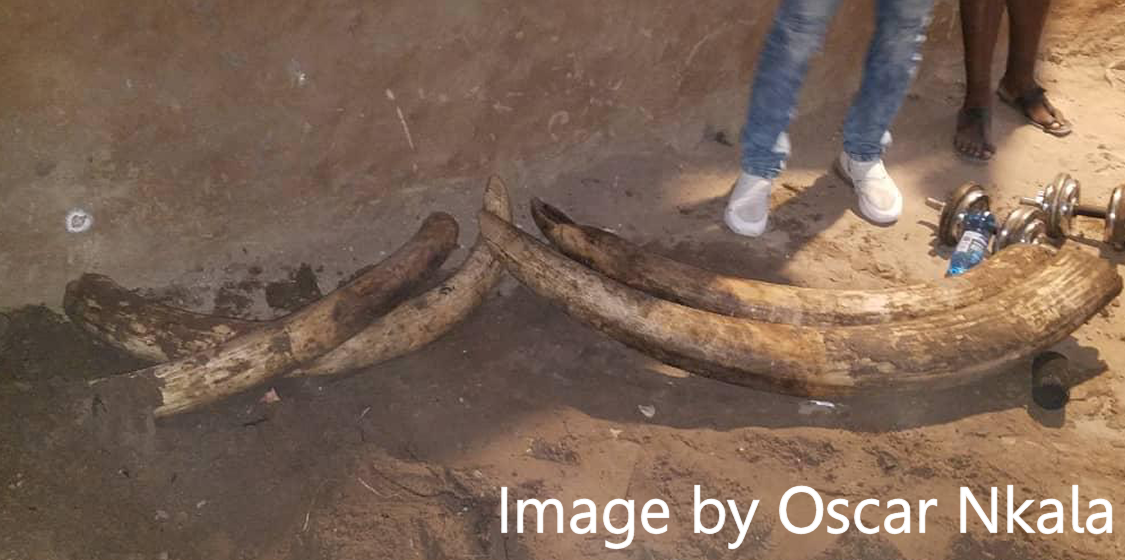
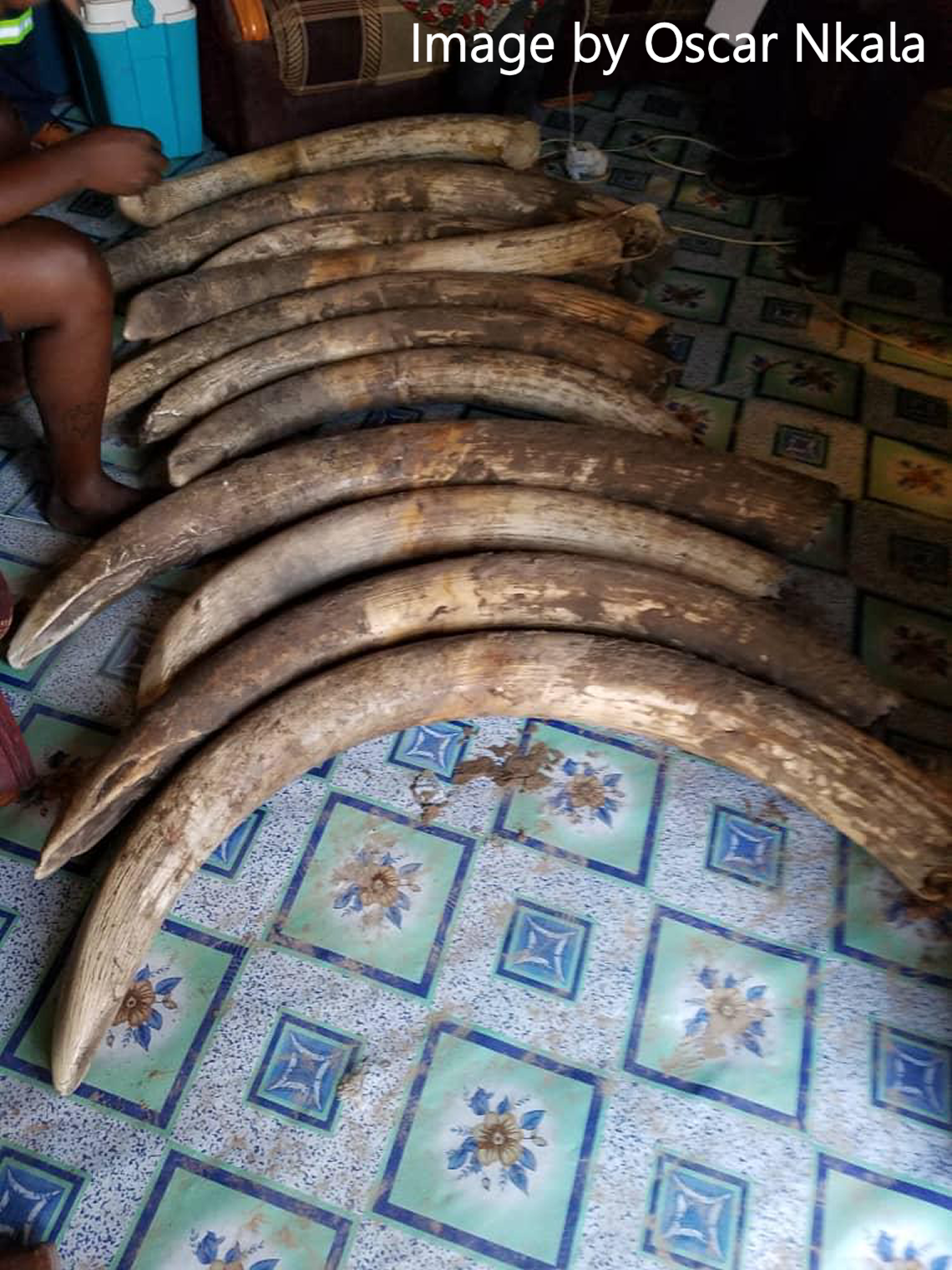
KATIMA MULILO, NAMIBIA - Police in Katima Mulilo have arrested two people for poaching and the illegal possession of two live pangolins and 11 elephant tusks with a combined weight of 272 kg.

The two – a man and woman – were arrested on June 2 when police and wildlife officials, acting on a tip-off, raided a mud shack in a suburb of the border town, on the bank of the Zambezi.

Tusks Seized

The law enforcement team found two live pangolins hidden in containers, inside the shack. The tusks were buried at different points inside and behind the shack.

Preliminary police investigations suggest all the ivory came from elephants poached across the border in Botswana. The source of the pangolins is yet to be determined.

Tusks Seized

Network for Animals (NFA) Campaigns Director, David Barritt, said the seizure of the pangolins, alongside a massive ivory haul, shows that the poachers are after all high-value animal species:

“This is yet more proof that elephant poaching is now a serious problem in Botswana. These tusks came from murdered elephants in Botswana which were smuggled in Zimbabwe. Yet in the face of overwhelming evidence, Botswana continues to deny there is poaching in the country. The world needs to let Botswana know in no uncertain terms that they are aiding and abetting the destruction of the elephant population,”
he said.